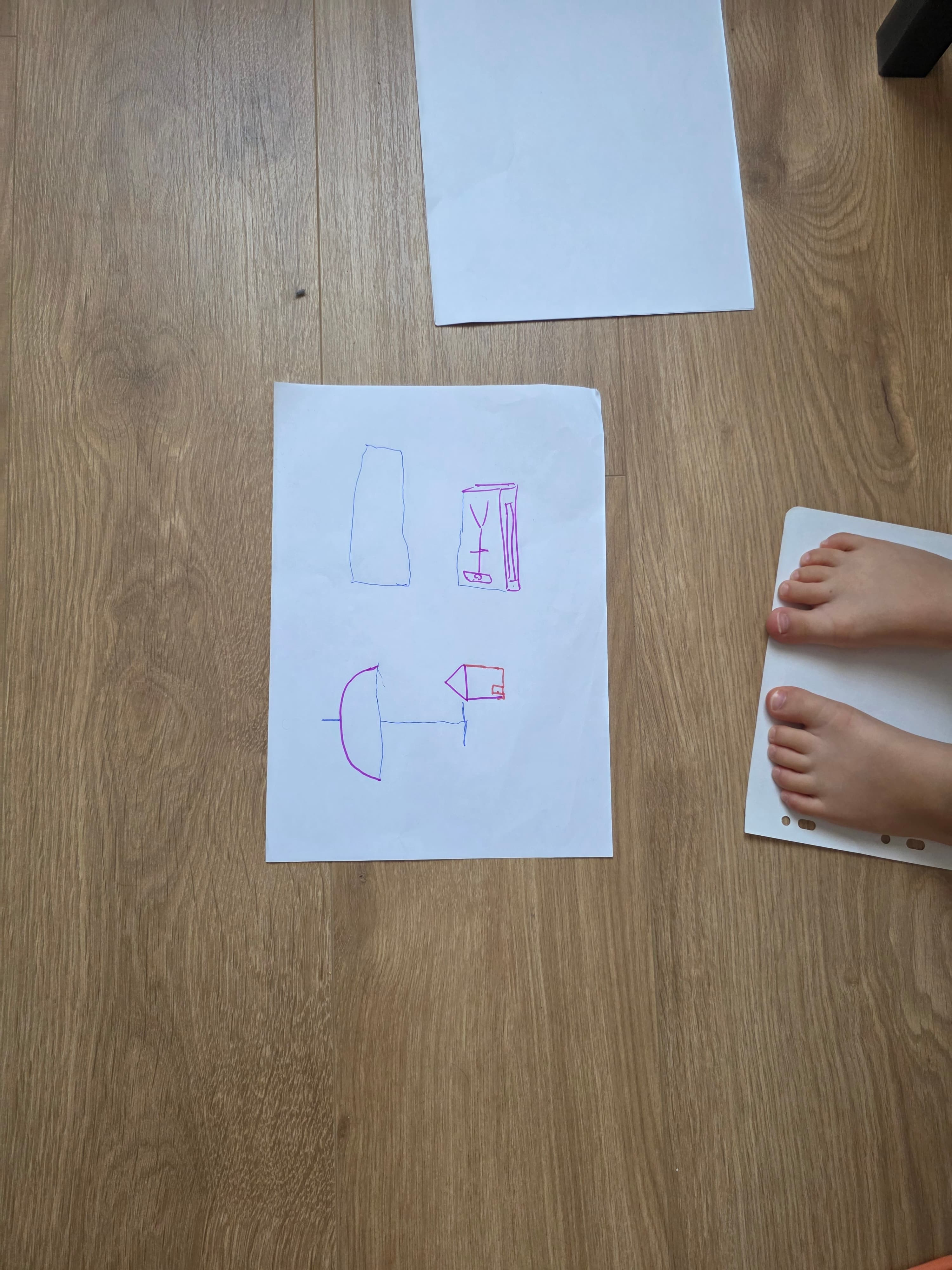
I draw a circle on the sheet. Nothing else around it, not a word.
"And then what happens?"
Romane looks at the circle. She shrugs. A circle on its own could become anything.
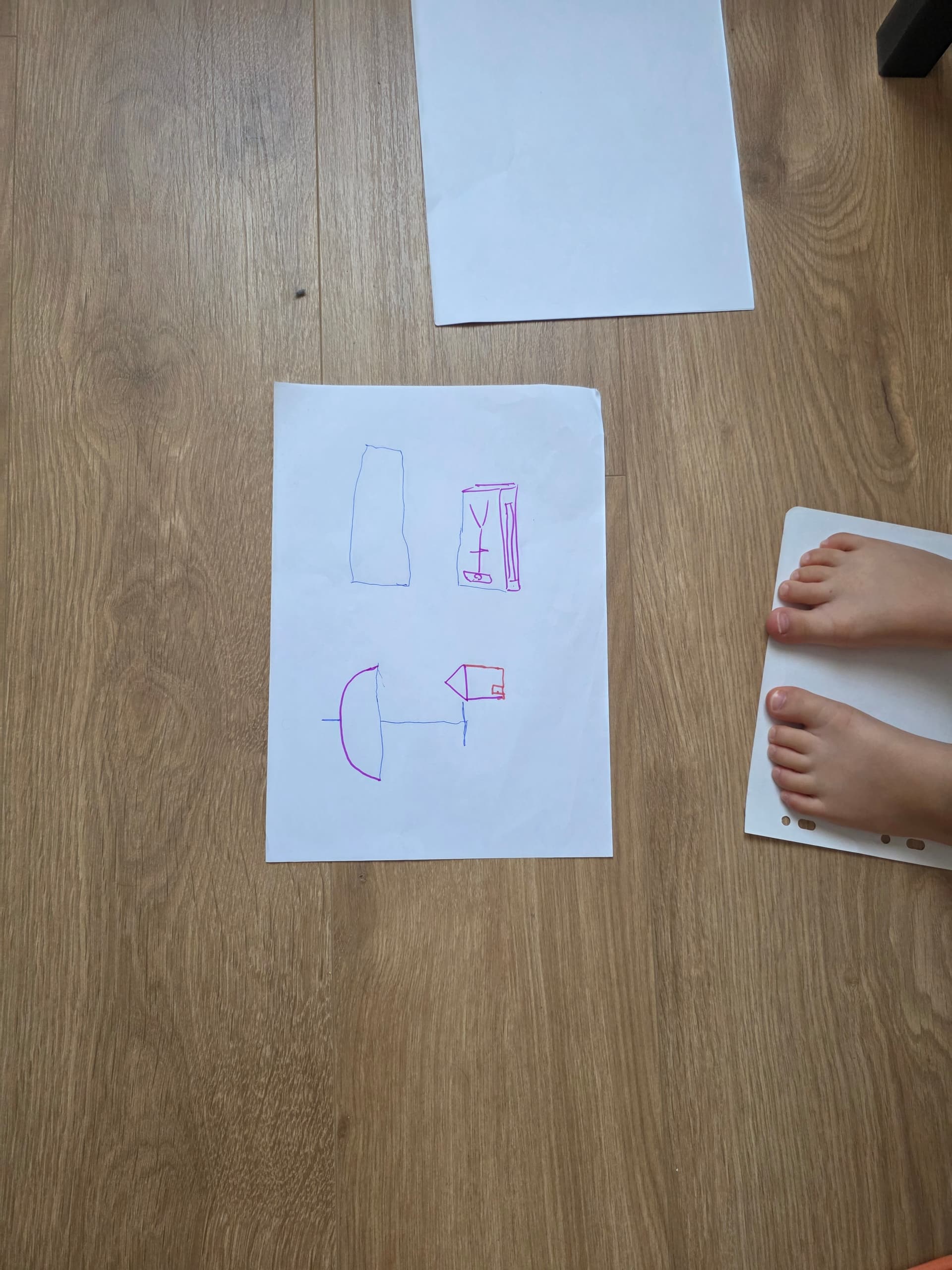
Same beginning, two different continuations depending where you're looking from.
How an AI guesses the next word
When an AI writes text, it doesn't know the sentence in advance. It moves forward one word at a time. At each word, it looks at what was written just before, and predicts the most likely word to continue with.
"Once upon a..." Almost everyone guesses "time." Not because it's the only possible continuation, but because it's the most likely one, given everything we've read or heard start that way before.
The less there is at the start, the more possible continuations there are. A circle on its own could become a wheel, a balloon, a piece of cheese, the sun. A single word could be followed by dozens of different words. The more context you add, one more word, one more line, one hint, the more the plausible continuations narrow down, until only one stands out.
And sometimes, from the exact same beginning, two equally plausible continuations exist. It's not that one is wrong. It's that there wasn't enough information to decide between them.
The activity
On a sheet of paper, draw the start of something: a circle, a line, a curve. Say nothing. Ask the child to guess what it's going to become, then to continue the drawing themselves.
Most of the time, with just the starting shape, they don't know, or they suggest several different ideas.
Then give a single hint, never the direct answer. Not "it's the sun," more like "you can see it in the morning." See if that's enough for the right continuation to emerge. Try again with other starting shapes and other hints.
Second version: sit on opposite sides of the same sheet of paper laid on the table. One of you starts a line, without saying what they have in mind. The other continues the drawing their own way, starting from that same beginning, without conferring. Then compare the two continuations.
What actually happened
The circle and the sun worked on the first try with the hint. Romane added the rays herself, rather pleased to have found the continuation.
The second version, sitting across from each other, was messier, for her and for me. We were each drawing our own continuation on the same sheet, in purple, orange, blue, and honestly I'd lost track of what we were continuing.
At one point, from the same starting line, she drew a continuation she called an upside-down lamp. From my side of the table, with the exact same line, I continued it into a boat hull. Neither of us was wrong. We'd just predicted two different continuations from the same beginning.
I still don't know if, on the rest of the sheet, the logical continuation was a boat, a bathtub, or a suitcase. Maybe it wasn't just one.
Romane eventually asked whether AI ever guesses the wrong continuation too.
I said: yes, all the time. It just picks the most likely continuation, not necessarily the right one.