Meryl shouted louder at what looks like its ears.
Ary didn't answer any better.
Ary is a connected plush toy with built-in AI. I'd seen it on a French entrepreneurship show. I ordered one for bedtime stories, with the idea that the kids could be active participants instead of just listening. That we could invent together instead of me reciting.
The first time we took it out of the box, it lasted an hour. Not in a calm way.
Romane and Meryl kept pulling it from each other every time they had a new idea, which happened every twenty seconds. They asked two contradictory questions in the same sentence. They didn't wait for the answer before heading in a new direction. And when the response didn't match what they wanted, they'd try again — louder, mouths pressed close to what looks like ears, as if the problem was volume.
In the middle of all this, Romane stopped for a second and asked, very seriously: "Ary, do you dream?"
Ary said something. I don't remember exactly what. Something about stories, maybe. Romane nodded, not entirely convinced, and immediately moved on to something else.
I came back to that later.
What made me laugh in the moment was the flipping. Ary has a feature: turn it upside down and it stops listening, resetting to standby. The kids figured this out pretty quickly. They'd flip it to cut off an answer they didn't like and start a new request. Like hitting Enter to stop an AI mid-response and rephrase the question.
At three and six, with no one explaining anything.
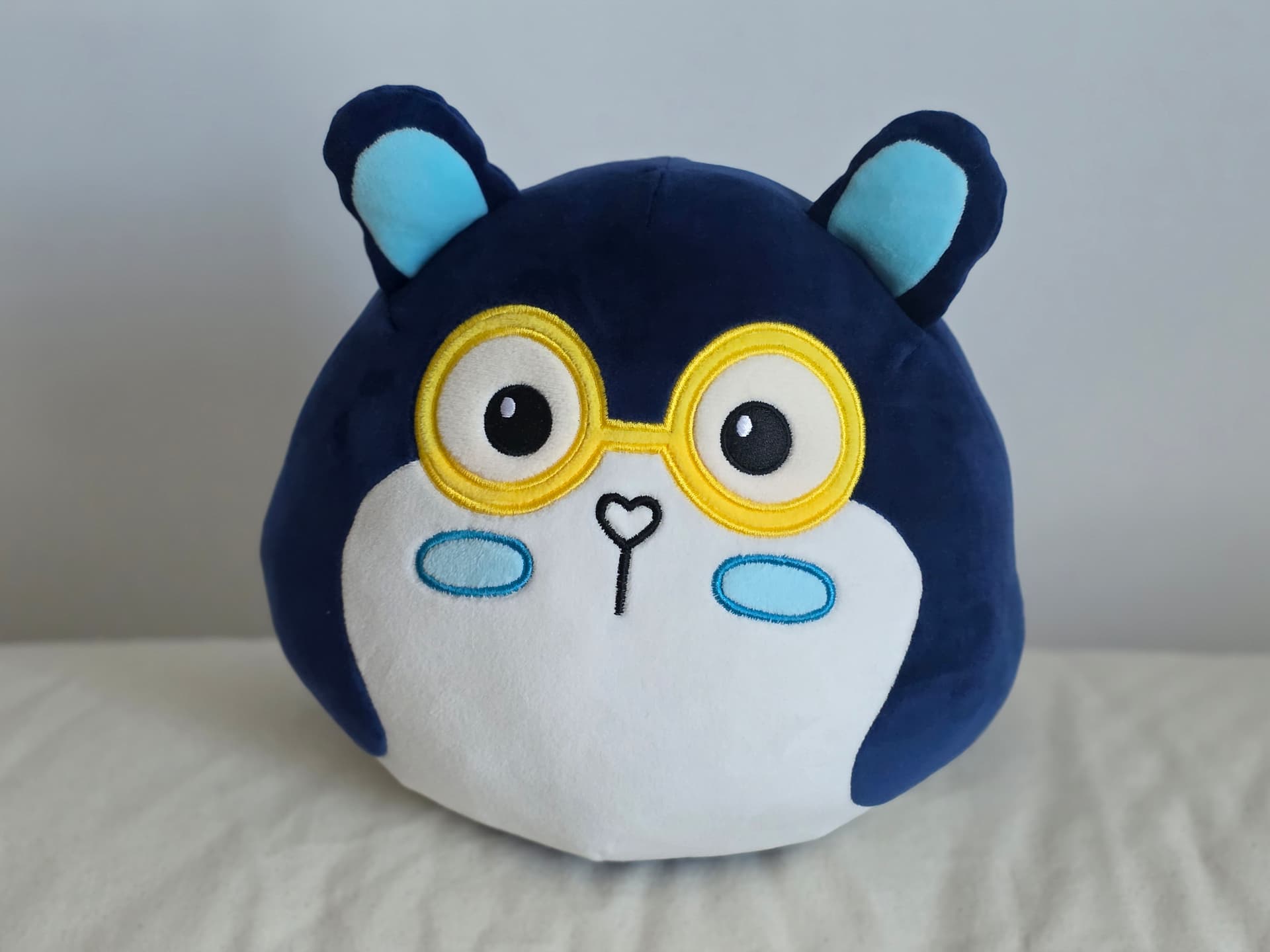
Ary. No partnership, no sponsorship — just a toy we bought that started everything.
What they were learning without knowing it
Watching them, I realized the chaos had a logic. The frustration came from a gap between what they asked and what they got. They hadn't yet understood that the quality of the answer depends on the quality of the question. That "tell me a story" and "tell me a story about a wolf who's afraid of the dark and meets a friendly fox" don't produce the same thing at all.
That's something it took me a while to figure out myself.
The difference: I'd read articles, tutorials. They had a plush toy and an hour of chaos.
But the problem remained: how do I give them what I'd understood, without lecturing? I'm their father, not their teacher. And at three and six, a talk about AI lasts thirty seconds before we're talking about something else.
The thing I'd read about kids' brains
I'd recently read something about brain plasticity. Young children's brains are in a period of high receptivity: they absorb, sort, and retain the structure of things they experience, even without naming them. You don't need to understand the concept of "classification" to have internalized that some things go together and others don't.
Montessori understood this a century ago. You don't explain order to children: you give them environments where they encounter order through experience, and their brains do the rest.
The idea was there: if I play games with them where they encounter, without knowing it, the basic concepts behind how AI works, something will stick. Not a definition. An intuition. And when they pick up Ary again in six months, or two years, or when they run into other tools, that intuition will already be there.
That's where the blog came from. Not from a plan. From a toy that kept answering wrong and kids shouting at it.
What this blog is, and what it isn't
It's not a teaching guide. I'm not a researcher, not a teacher, not a child development specialist. I'm a father who thinks the topic matters and believes kids are capable of grasping the core ideas, as long as you present them differently than with slides and definitions.
Every article here documents a real attempt. Some work. Some go sideways. Meryl runs off with a photo at the wrong moment. Romane invents categories no engineer would have thought to test.
That's what I want to keep: not the pedagogical success, but the honesty of the fumbling.
Romane asked me a question a few weeks later, at the table, between two bites. Whether AI dreams.
She'd already asked Ary. Ary had said something. That apparently hadn't been enough.
I didn't know what to say either. Not because the question is hard. Because I didn't have the right words yet.
Later, I said: "I think no. But I'm not sure. And the people who build it aren't sure either."
She thought about it. "It's strange to build something without knowing everything it does."
Yes. That's exactly it.