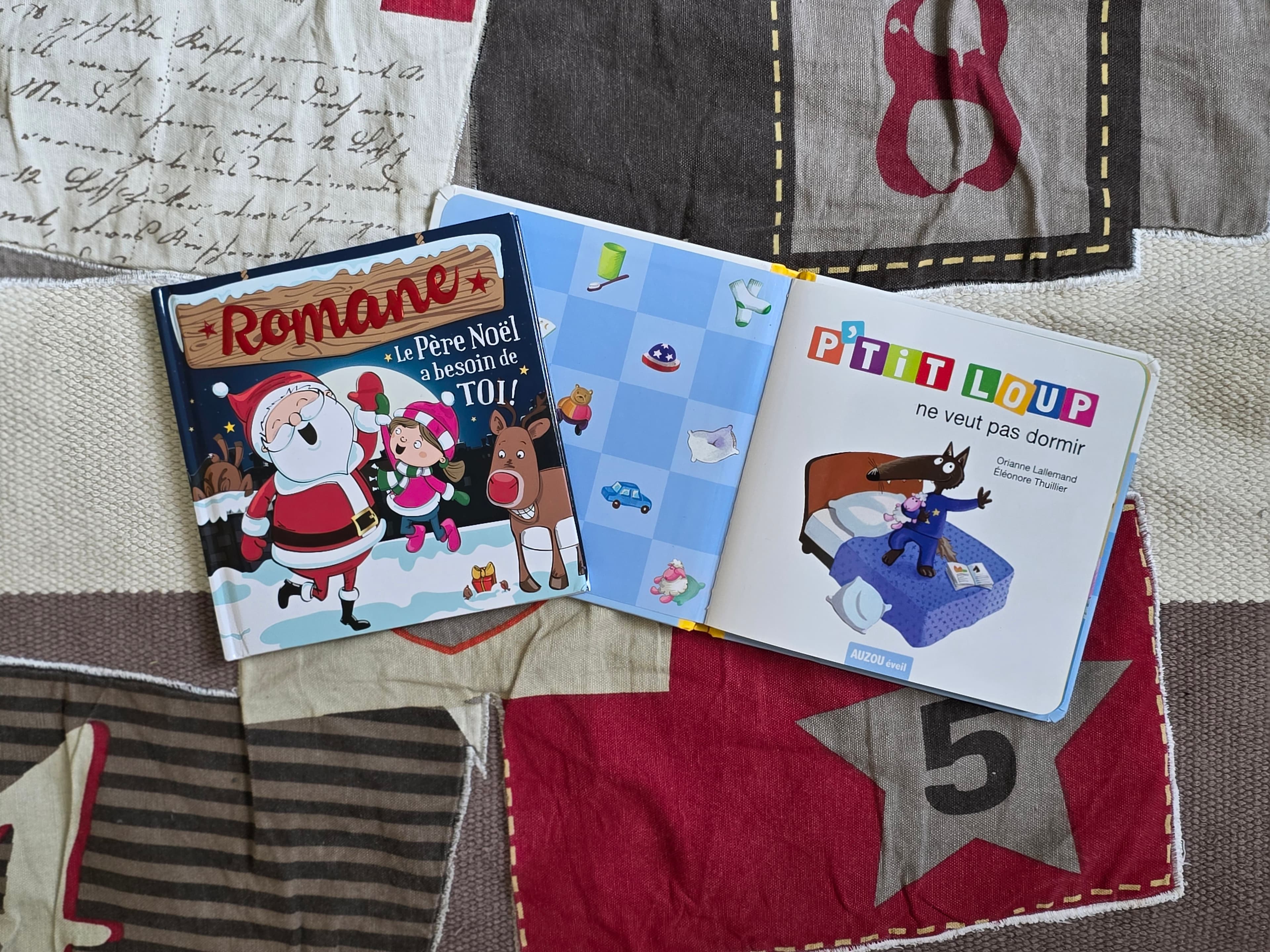
I read: "Little Wolf doesn't want to..."
Meryl answered: "...sleep."
Not because he'd thought about it. Because that's the title of the book, we were in the middle of the bedtime story, and that word was everywhere.
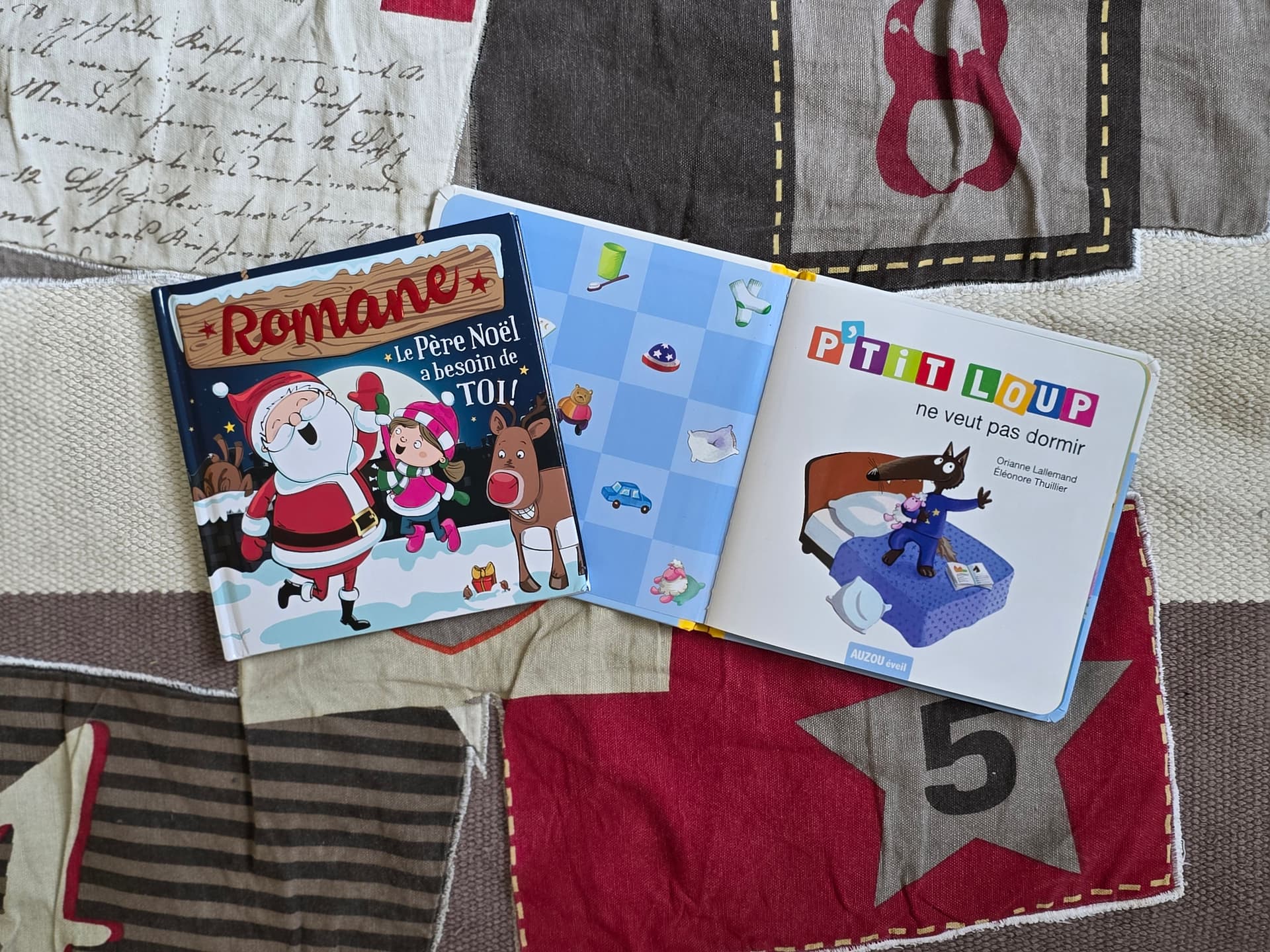
The two bedtime books. Meryl's, and Romane's personalised one, a gift from her uncle.
What AI does when it speaks
When ChatGPT answers a question, it doesn't look up the right answer in a database. It predicts the next word.
From everything it read during training, it calculates which word is most likely to come next. It picks that word, does it again for the one after, and again. Not because it understands. Because it's seen an enormous number of sentences before.
And sometimes, like Meryl with "sleep", it lands right without really knowing why.
The activity
Pick a book the child knows well. Read a sentence and stop before the end. The child completes it. Then read the real continuation. Could their word have worked too?
Second round: the adult says one word, the child says the one that comes naturally after. You build a sentence together, one word each. Then read what you got.
Variation for laughs: throw in words that don't fit. Kids usually prefer this part.
What actually happened
Meryl didn't get the game. At three and a half, the bedtime story isn't a laboratory. He was looking at the pictures. He kept saying "sleep."
At one point I left a sentence hanging. He answered: "A little... CUDDLE." It was "wee." He hadn't got it. But straight after, he showed me the picture. Little Wolf was doing a wee. He hadn't guessed the word. He'd used the picture to prove he'd still understood something.
Romane had her personalised book. Romane, Father Christmas Needs You, a gift from her uncle. She doesn't know it by heart. When I stopped on "In the sky...", she suggested "starry." Not the word in the book. I told her it could work too.
"AI can find the words."
We kept going, one word each. I asked how she found her words.
"They just come into my head."
That's probably one of the best explanations possible. Words come because she's heard thousands of sentences since her very first months. Her brain is still in the window when language gets absorbed almost effortlessly, before it starts requiring effort. Words come because she's heard sentences, beginnings, endings. Because she feels what can follow. An AI doesn't feel. But it does something that looks like that, with far more examples.
We tried strange words after that. Things went off the rails. Much better. Later both kids kept going at the dinner table while I was cooking. I wasn't running anything anymore.
To finish
I don't know if AI would say the same.
It would probably predict: "Words come..."
And choose "naturally."
Which isn't wrong.