"The rabbit eats a..."
Romane said carrot without thinking.
I asked why. She shrugged. "Rabbits eat carrots."
That's exactly why an AI would give the same answer. Not because it knows rabbits. Because it's read millions of sentences where "the rabbit eats a" ends with "carrot." It learned what comes next, not what's true.
That wasn't the activity yet.
What AI does with words
When an AI reads a sentence, it doesn't read the words in order and stop there. It tries to figure out which ones matter most to the others.
In "the dog eats Romane's cake", the word "eats" explains everything else. Without it, the dog and the cake have no connection. Modern AI learns to spot these words and pays them more attention than the rest.
This mechanism is called attention. It's one of the central ideas behind large language models.
The activity
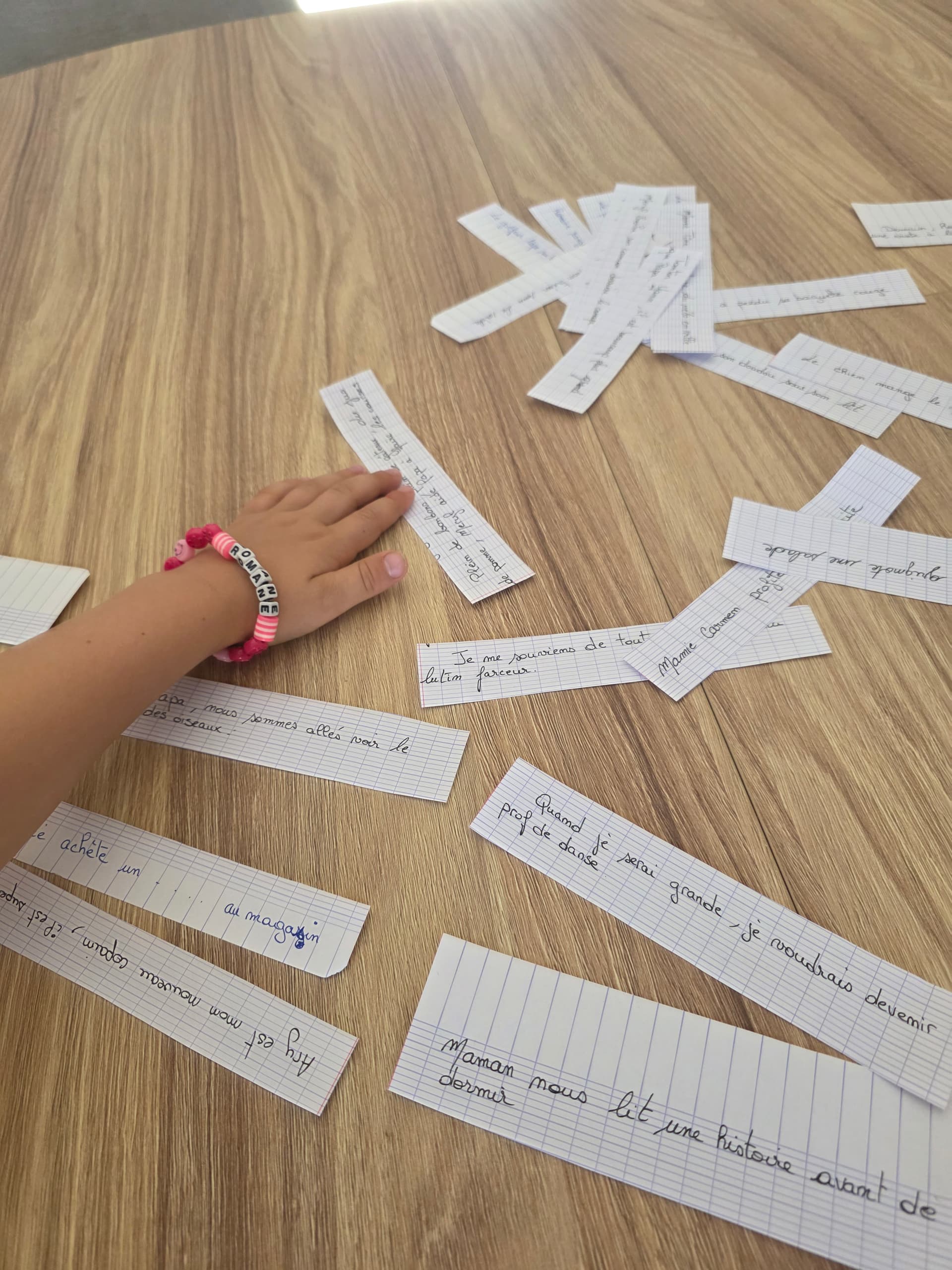
I'd prepared sentences on sheets of paper: simple ones ("the rabbit eats a carrot", "the witch lost her red wand") and more personal ones ("Meryl hid his comfort toy under his bed", "Uncle Yann is much taller than Dad", "when I grow up, I want to be a dance teacher").
Instructions: cross out the words that aren't the most important. Then test it: if you read the sentence without the crossed-out word, does it still mean something?
The starting sentences. Some simple, some from real life.
What actually happened
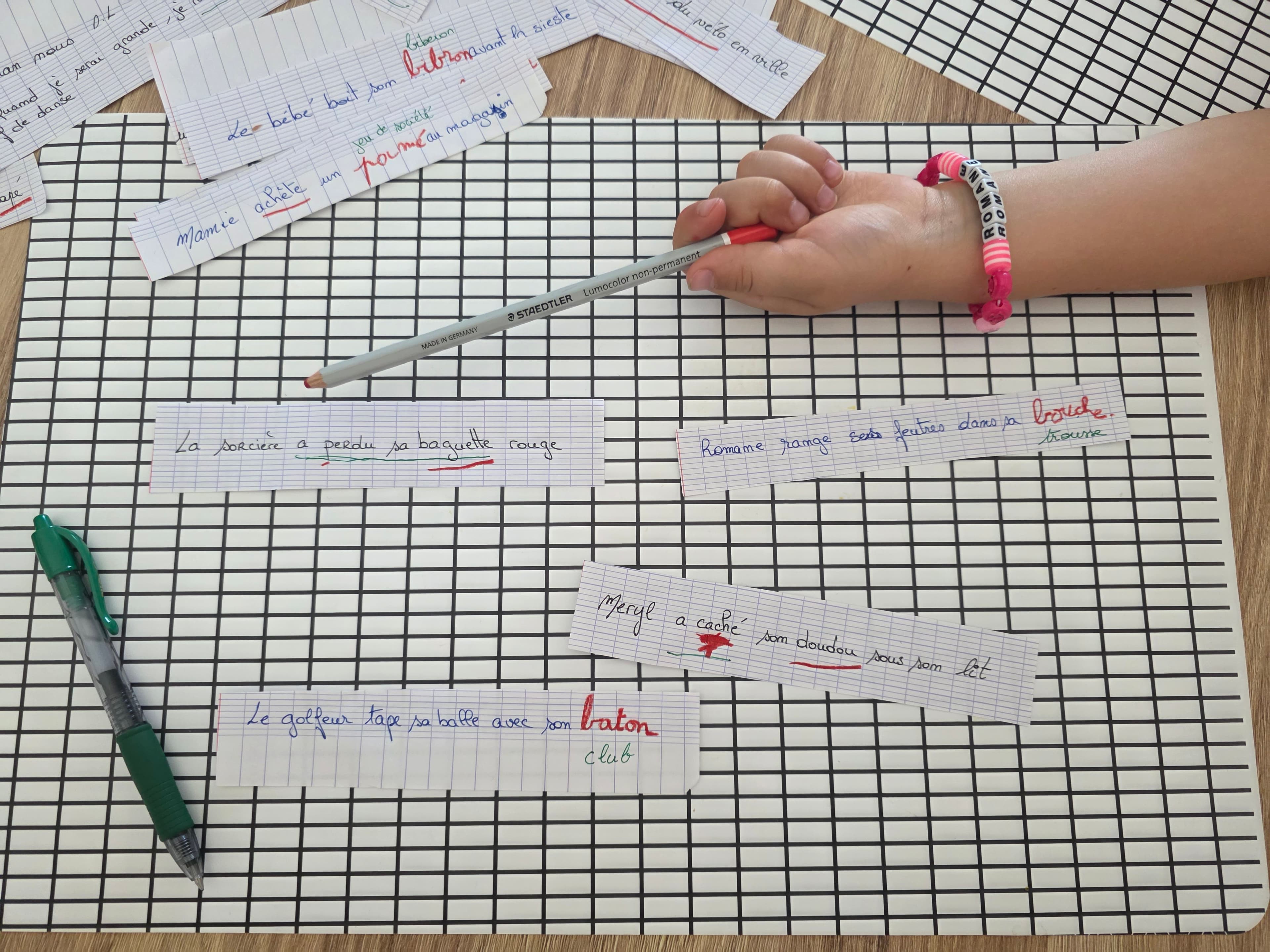
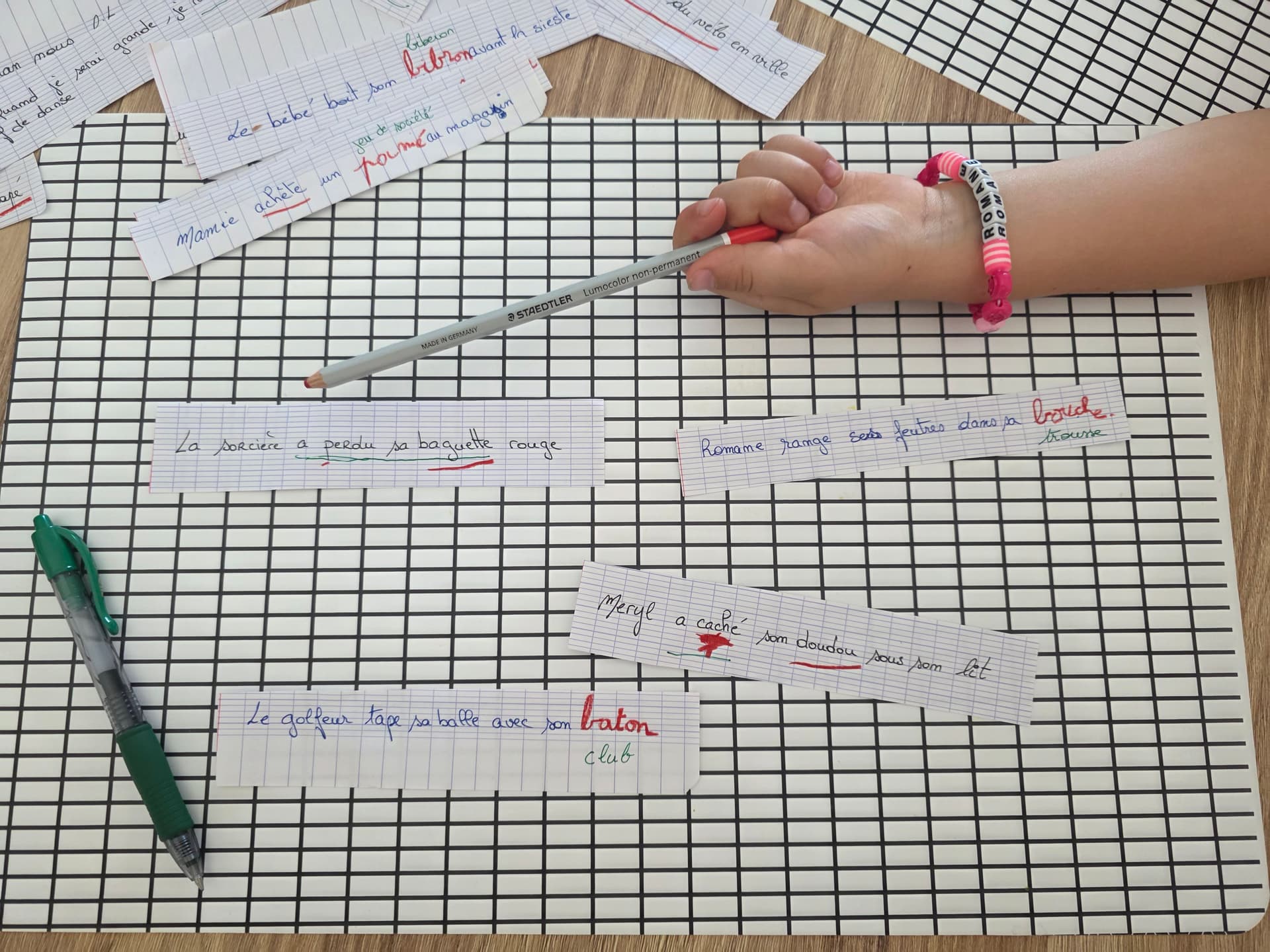
Romane started with "the witch lost her red wand." She crossed out "red." We read it back: "the witch lost her wand." She nodded. It worked.
"Uncle Yann is much taller than Dad." She crossed out "Yann." Result: "Uncle is much taller than Dad." I showed her we could also drop "much": "Uncle is taller than Dad." Still standing.
"Grandma loves cycling around town." She crossed out "around town." We read it back. It held.
She ended up naming the rule: the words that stay are the ones without which the sentence collapses. She called them glue words.
After Romane. The crossed-out words are hers.
Then: "When I grow up, I want to be a dance teacher."
Romane put down her marker. "You can't take anything out."
I crossed out "when I grow up" to show her that "I want to be a dance teacher" still meant something.
She wasn't convinced. For her, crossing out "when I grow up" meant removing something beyond the sentence.
Romane was right. Some words don't carry meaning in the sentence. They carry identity. A child's brain makes that distinction early. It can't name it. But it knows you don't touch those words.
To finish
I told her that the researchers who invented the attention mechanism in AI had spent years on this same question: which word matters to which other word.
Romane shrugged.
AI can spot the glue words in a sentence about a rabbit. But "when I grow up" might not be a word you take out.